The morning of September 11, 2001 when planes were flown into the Pentagon and the Twin Towers, Psalm 20 was on my lips
“Some trust in chariots…, but we trust in the name of the Lord our God.”
I was in the process of pulling away from the Evangelical church, but the last straw was what followed. My initial response to the national trauma of 9/11 was to recognize that there was nothing I could do and that trusting in the government or the military was foolish and misguided. The Christians who shared my outlook and identity had other ideas. It wasn’t long before calls of retaliation and war were most loudly heard from conservative Christians, especially evangelicals. In addition to calls for a “Christian” nation to defeat a heathen attacker, the same so-called Christians were calling the attacks of 9/11 God’s punishment for the sins of America, sins of homosexuality, feminism, abortion, and all the other boogeymen of the religious right.
That was the final straw, and I ran. At the time I was taking two philosophy courses, Intro to Existentialism and Philosophy of Religion. In philosophy of religion I was learning the best arguments for and against the existence of the theistic God. In intro to existentialism I was reading Nietzsche, Sartre, Heideger and Kierkegaard, among others. These thinkers considered how meaning is created and how we are responsible for the values we hold and live by. Each of us is free to create any values of our choosing, and none of us can evade the responsibility for the particular values we choose to live by. Meaning isn’t written into the nature of things, and no fact can constrain what value we place in them.
Nothing could have been more liberating for me, to recognize that there were other ways to think about the nature of existence, reality, morality, and the good life besides the narrow religious modes of thought in which I was entangled. Human wisdom and knowledge were vast, an open terrain to be explored and enjoyed without guilt or constraint.
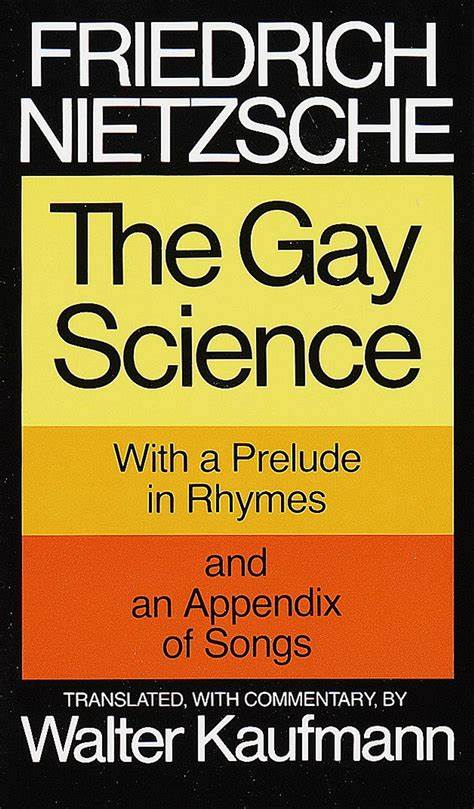
Of particular influence to me during this time was the philosophy of Friedrich Nietzsche. His often misunderstood proclamation took on special meaning for me. Nietzsche’s idea is that a certain conception of the deity used to condition the trajectory and boundaries of Western thought. As Europe became more secular and non-theistic explanations for nature and culture became more widespread and accepted, God as an intellectual category or explanation no longer functioned to ground human knowledge or morality.
While Nietzsche saw danger in a society unmoored from its theistic foundations, he also saw great potential. No longer were certain thoughts or ideas off limits. Seeking knowledge, creating value, and imbuing things with novel meaning could become a great adventure of discovery, and that is what I experienced it as.
Here is how Nietzsche puts it:
We philosophers and “free spirits” feel, when we hear the news that the “old god is dead,” as if a new dawn shone on us; our heart overflows with gratitude, amazement, premonitions, expectation. At long last the horizon appears free to us again, even if it should not be bright; at long last our ships may venture out again, venture out to face any danger; all the daring of the lover of knowledge is permitted again; the sea, our sea, lies open again; perhaps there has never yet been such an “open sea.”— (Gay Science 343)
I came to identify as one of “we philosophers,” deciding to pursue graduate education in philosophy. During a Masters in philosophy, I met others who shared this openness to exploring and creating values outside of established structures. These new friends taught me how to love myself and love diverse and imperfect people, things I had forgotten or repressed with my years of being limited to a single interpretation of the world that lacked an openness to existence and to others who were different. I can only describe that time as one of ecstatic joy as I traversed all the boundaries I once thought had been fixed. I hoped to teach what I had discovered as a philosophy teacher. The seas were open again, the horizon, clear and bright.
 Dionysus on a Bike
Leave a comment